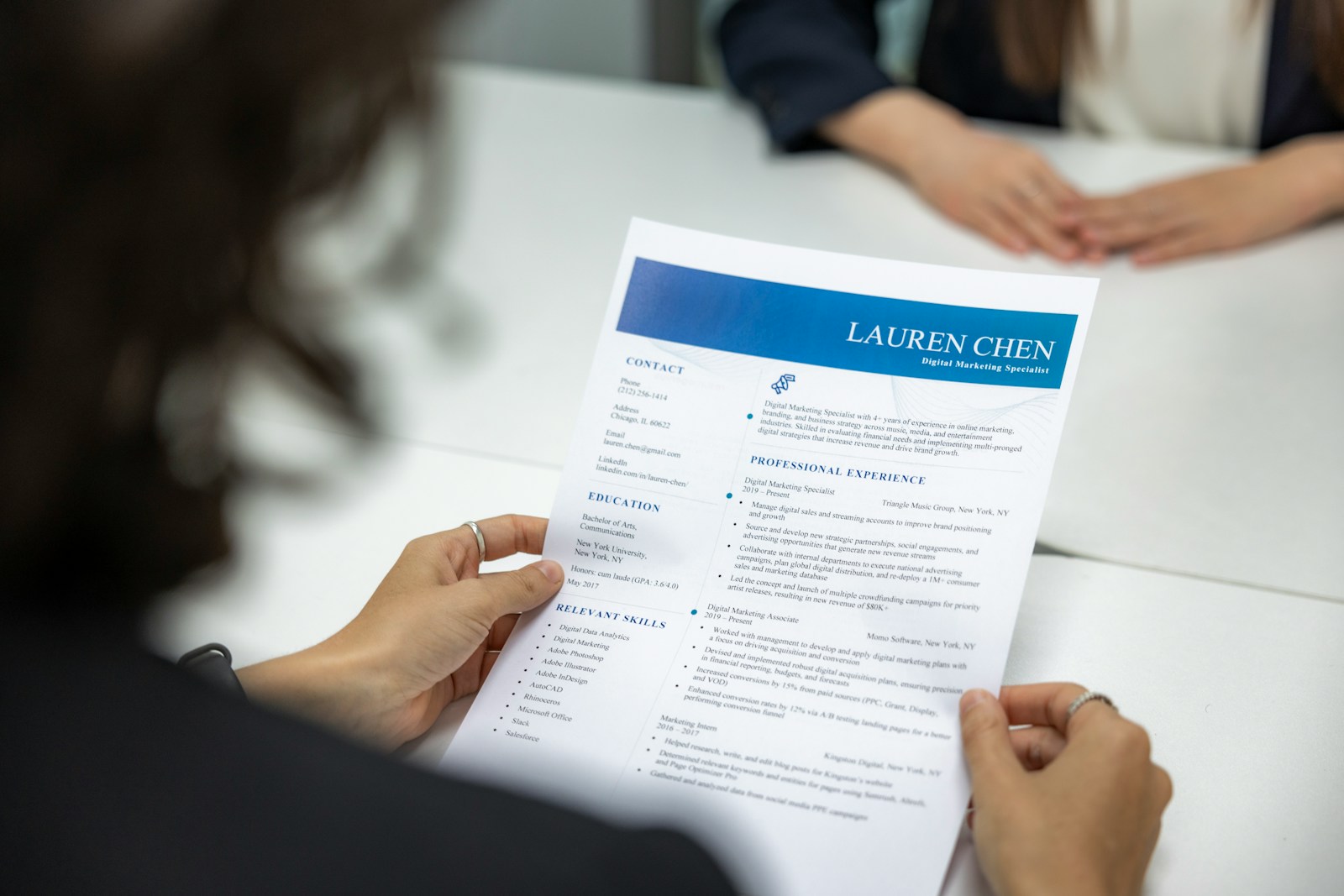
If you have hired in the last 6 months, you have felt it. Finding a good candidate feels harder than it used to.
Yes, the economy is tight and companies are posting fewer roles. But as a hiring manager, that has not made hiring easier. It has meant one posting gets flooded with hundreds of applicants in a day.
And I think there is something bigger happening underneath that.
It is AI.
On one side, candidates can now apply to hundreds of jobs in 30 minutes. On the other, recruiters are using AI to screen thousands of resumes in seconds. The result is a flood on both ends.
Many recruiters use AI tools to sift through resumes and source candidates, but more and more HR pros are growing concerned about the rise of AI application fraud. An Equifax report found that while 78% of people pros say AI increases hiring and onboarding efficiency, 36% report the rise of AI-generated candidate information has reduced their confidence in hiring decisions. Nearly three fourths have seen fabricated or misleading candidate information.
Everyone is using AI to solve the hiring process, and it has also become the problem in the process.
And I will be honest: I do not think the industry has a real answer for this yet. The tools are changing faster than our process. So this week, I just want to name what is happening and share what I am looking for as a manager because I know a lot of you are staring at a pile of 500 perfect looking resumes and thinking, how am I supposed to tell?
Why every resume looks perfect now
It used to be that a great resume stood out because someone took the time to tailor it. Now, anyone can paste your job description into a tool and get a resume that matches it word for word in 10 seconds.
If you post a role and get 1,000 applicants overnight, there is no way to really look at all of them. And the ones that rise to the top of your ATS all sound the same. Too perfect. Too polished. Too optimized.
A friend of mine posted a product role last month. He told me he had 3,000 applications in the first hour. Not the first day. The first hour.
He took the posting down. Not because he found someone, but because it was impossible. He ended up writing a post on LinkedIn just saying what he was actually looking for and asking his network to share it or send someone directly if they knew them. He removed the application process entirely because the process itself had become unusable.
That story stuck with me because I think a lot of us are there.
So how do you spot a real person in there?
Here are 5 things I look for on the resume now. Not as a checklist, but as human fingerprints:
1. Specificity over perfection.
AI is great at buzzwords. Humans are great at specifics.
Bad sign: "Led cross functional initiatives to drive synergy and optimize outcomes."
Human sign: "Led a team of 4 support reps, cut our ticket backlog from 180 to 40 in 3 weeks by rewriting our triage process."
I want numbers, but I want messy, real numbers. Not every metric is up and to the right.
2. Progression, not just keywords.
Does the resume show growth? Did they start as an associate and become a lead? Did their responsibilities actually increase? Or did they have the same title with increasingly fancy verbs for 3 years?
I also look for context. "Managed onboarding" means something very different at a 10 person startup vs. a 5,000 person company. A good candidate tells me which one it was.
3. The imperfect explain.
Career gaps, short stints, a sideways move. Those used to be automatic red flags. Now I read them as potential honesty.
If someone writes "Left in March 2024 due to layoff, team of 12 cut to 4" that is a person. If every job is exactly 2 years and ends with "seeking new opportunities," I have more questions.
4. What they did not copy from my job description.
Everyone copies what we ask for. Good candidates add something we did not ask for.
They mention the internal tool they built that was not in the requirements. They mention mentoring two new hires. They mention the customer complaint that changed how they did things. That extra detail is usually the real work.
5. A real artifact, not just a claim.
A link to a portfolio, a writing sample, a Loom walking through a project, a repo, even a redacted deck. It is not about being flashy. It is about saying "here is proof I did the thing."
Then I verify in the interview, with stories
Recruiters and talent pros need to be vigilant when cross checking information on resumes because AI tools can exaggerate or fabricate details. And with remote roles, there have been instances where someone else interviews on a candidate's behalf.
So in the interview, I stopped asking definition questions. AI can answer "What is good onboarding?" better than most humans.
I ask story questions:
"Tell me about a time your onboarding plan did not work in the first week. What did you change?"
"Walk me through the last person you managed who was struggling. What was the first conversation like?"
"Show me on screen how you organized that project."
I want to hear pauses. I want to hear "I am not sure, but here is what I did." Perfect answers make me more nervous now, not less.
We do not have this solved, and that is okay to say
Some companies have reverted back to in person interviews to combat this. Others are investing in better tech to validate identities, IP addresses, and credentials.
The best advice out there right now is still "trust, but verify" at three points: the interview, the background check, and the onboarding process.
But for most of us first time managers? We do not have a fancy fraud stack. We have our judgment.
So I want to normalize this: If hiring feels harder and noisier right now, it is not just you. It is harder. The old signals, a clean, keyword matched resume and a polished answer, do not mean what they used to.
We have to look for the human underneath the optimization.
And that takes more time. Which is frustrating when you have 500 resumes. But I would rather spend an extra 10 minutes with 5 real candidates than rush through 50 perfect ones that are not real.
The flip side: AI was supposed to solve this for everyone
And here is the flip side I keep thinking about. For job seekers, it feels like AI was supposed to solve everything. Write the perfect resume, find the perfect match, get you hired faster.
Instead, it has made it harder to be seen as human.
If you are applying right now, the most human thing you can do is also the best strategy: show real work, tell real stories, and apply directly where you can be verified. Do not try to be the most perfect candidate in the pile. Try to be the most real one.
If you are in this right now, applying or hiring, give yourself some grace. It is a messy moment for both sides. Let us be a little more curious and a little less quick to assume the perfect resume equals the perfect person.